

Were the gods of the ancient world visitors from another world?
For thousands of years, humanity has looked up at the stars and wondered whether we are alone. But what if our ancestors did not merely wonder — what if they already knew the answer? The ancient aliens theory proposes one of the most controversial and captivating ideas in modern thought: that extraterrestrial beings visited Earth in the distant past, profoundly shaping human civilization, religion, and technology.
Dismissed by mainstream science, yet embraced by millions around the world, the theory refuses to die. And perhaps for good reason.
The Monuments That Shouldn’t Exist
Stand at the base of the Great Pyramid of Giza and the numbers become difficult to explain. Built around 2560 BC, the structure contains an estimated 2.3 million stone blocks, each weighing between 2.5 and 80 tonnes. The pyramid is aligned to true north with an accuracy of 0.05 degrees — a precision that even modern engineers would struggle to match.
How did a civilization without steel tools, without the wheel in practical construction use, and without modern surveying technology achieve this? Traditional archaeology points to organized labor, ingenuity, and time. Ancient alien theorists point to something else entirely.
The Great Pyramid is not alone. Across the planet, separated by thousands of miles and thousands of years, ancient cultures built structures of breathtaking complexity and scale. The megalithic site of Puma Punku in Bolivia features interlocking stone blocks carved with machine-like precision. Sacsayhuamán in Peru contains walls built from stones weighing over 100 tonnes, fitted together so tightly that not even a sheet of paper can pass between them. The temples of Baalbek in Lebanon rest on a foundation of stone blocks — the largest of which weighs an estimated 1,650 tonnes, making it the heaviest worked stone in human history.
No modern crane could lift it. No ancient one could have either — at least not by any method we currently understand.
The Gods Who Came From the Sky
Perhaps more compelling than the stones themselves are the stories carved into them. Ancient cultures across the globe share a remarkably consistent narrative: gods descended from the heavens, taught humanity the arts of civilization, and then departed, promising to return.
In ancient Sumer — widely regarded as the world’s first civilization — the gods were known as the Anunnaki, a word that translates roughly as “those who from the heavens came.” The Sumerian texts, some of the oldest written records in existence, describe these beings in vivid detail: tall, powerful, arriving in craft that roared and gleamed, bestowing knowledge of agriculture, mathematics, and law upon early humans.
The ancient Egyptians revered gods who arrived in the “Barque of Ra” — a celestial vessel that crossed the sky. The Hindu Vedic texts describe flying machines called Vimanas, capable of incredible speeds and sophisticated weaponry. The Book of Ezekiel in the Old Testament contains a description so detailed — wheels within wheels, gleaming metal, creatures with four faces — that aerospace engineer Josef Blumrich analyzed it in the 1970s and concluded it was a technically coherent description of a spacecraft.
Across the Americas, the Dogon people of West Africa possessed detailed astronomical knowledge of the Sirius star system — including the existence of Sirius B, a dwarf star invisible to the naked eye — centuries before Western science confirmed it. Their oral tradition attributes this knowledge to beings who descended from the sky in an ark accompanied by fire and thunder.
Ancient Art and the Astronaut Question
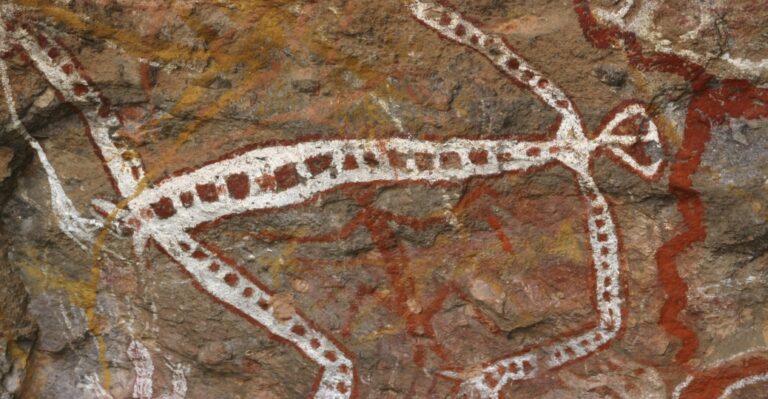
One of the most visually striking arguments for the ancient alien theory comes from art. In caves, temples, and tombs around the world, ancient humans depicted figures that bear an uncanny resemblance to what modern people would describe as astronauts.
The most famous example is the sarcophagus lid of Pakal the Great, the seventh-century Mayan ruler buried at Palenque in Mexico. Carved in extraordinary detail, the image shows a man in a reclined position, surrounded by machinery, his hands on controls, his feet on pedals — appearing, to modern eyes, remarkably like a man piloting a spacecraft.
In the cave of Tassili n’Ajjer in Algeria, prehistoric rock paintings dating back over 6,000 years depict humanoid figures with round, helmet-like heads and what appear to be suits covering their bodies. In Japan, the ancient Dogu figurines — small clay statues from the Jōmon period — show figures wearing what look unmistakably like visored helmets and jointed suits, thousands of years before any such technology existed.
Mainstream archaeologists offer alternative explanations for each of these: religious symbolism, cultural abstraction, the human tendency to anthropomorphize. Ancient alien theorists argue that the simplest explanation is often the most obvious one — that our ancestors drew what they saw.
The DNA Question
In recent years, the ancient alien debate has moved beyond stones and artwork into the realm of biology. In 2013, a strange mummified skull discovered in the Atacama Desert of Chile — nicknamed “Ata” — was found to have unusual skeletal features, including an abnormally small, elongated head with only ten pairs of ribs instead of the standard twelve. Initial speculation ran wild.
DNA testing eventually identified Ata as human — a premature infant with rare genetic mutations. But the case drew renewed attention to a broader phenomenon: elongated skulls found at sites across Peru, Egypt, and Malta. The Paracas skulls of Peru, discovered in 1928, are among the most dramatic examples. Some of these skulls are significantly larger in volume than a normal human cranium — a difference that simple head-binding, a known cultural practice, cannot fully explain.
DNA tests on some Paracas skull samples have reportedly returned results that researchers describe as highly unusual, with mitochondrial DNA showing mutations unknown in any human or primate species. The results remain contested and unpublished in peer-reviewed literature — but they have not gone away.
What Mainstream Science Says
It is important to be clear: the ancient alien theory is not accepted by mainstream archaeology, anthropology, or biology. The scientific consensus holds that the great monuments of antiquity were built by human hands, human minds, and human ingenuity — achievements that, far from requiring supernatural or extraterrestrial explanation, are testaments to what organized human societies are capable of.
Critics of the ancient alien theory argue that it underestimates ancient humans, sometimes uncomfortably implying that certain civilizations could not have achieved greatness on their own. They point out that experimental archaeology has repeatedly demonstrated how ancient construction techniques could have worked using period-appropriate tools and methods. The alignment of monuments to celestial bodies, they argue, reflects sophisticated astronomical knowledge — not extraterrestrial instruction.
These are serious and legitimate objections that deserve respect.
The Question That Remains
And yet. The sheer geographic spread of similar myths, similar construction techniques, similar astronomical knowledge, and similar artistic depictions — across cultures that had no known contact with one another — is a puzzle that science has not fully resolved.
We live in a universe of approximately two trillion galaxies, each containing hundreds of billions of stars. The idea that life arose only once, only here, on this pale blue dot, strikes a growing number of scientists as statistically extraordinary. The discovery of extremophiles — life forms thriving in conditions once thought impossible — has dramatically expanded our understanding of where life can exist.
In 2017, the U.S. government officially confirmed the existence of its Advanced Aerospace Threat Identification Program, acknowledging that military pilots had encountered craft performing maneuvers that defied known physics. In 2023, a former intelligence officer testified before Congress that the U.S. government possesses non-human craft and biological material of unknown origin.
We may be closer to answers than at any point in human history. And if those answers turn out to confirm visitation — past or present — then the ancient alien theorists, long ridiculed at the fringes of acceptable inquiry, may have been asking the right questions all along.
Conclusion
The ancient alien theory sits at the intersection of archaeology, mythology, biology, and modern UFO disclosure — a place where evidence is fragmentary, interpretations are fiercely contested, and certainty is impossible. What is certain is this: our ancient past is stranger, more sophisticated, and more mysterious than we once believed.
The stones are still standing. The carvings are still there. The stories have survived for thousands of years.
Someone built all of it. Someone told all of those stories. The only question is — who?


0 Comments