
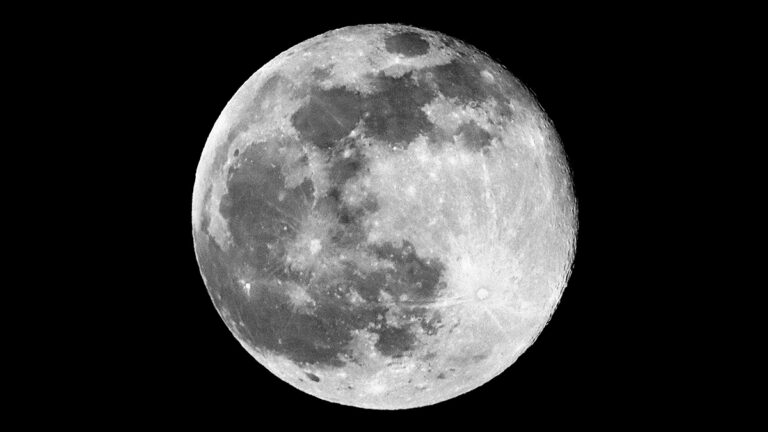

New research maps over 1,000 previously unknown cracks on the lunar surface, raising fresh questions about the Moon’s future — and humanity’s plans to live on it.
The Moon — our closest celestial neighbor, Earth’s silent guardian, and a target of humanity’s next great leap into space — is slowly dying. New scientific research published in The Planetary Science Journal has confirmed what some scientists have suspected for years: the Moon is actively shrinking, and the consequences could be far more dramatic than anyone anticipated.
Smithsonian scientists have mapped 1,114 previously unknown ridges spread across the Moon’s dark volcanic plains, more than doubling the known count to 2,634. These formations — known as small mare ridges (SMRs) — are not just geological curiosities. They are the wrinkles of a dying world, scars left behind as the Moon slowly collapses inward.
A World Cooling From the Inside Out
The cause is deceptively simple. The Moon has lost about 165 feet in radius over the past 200 million years as its interior gradually cools and contracts. When that happens, the crust has nowhere to go — it buckles and fractures, forming cliffs known as lobate scarps.
Think of it like a grape drying into a raisin. As the interior shrinks, the outer shell compresses and wrinkles. On Earth, plate tectonics constantly recycle and renew the surface. The Moon has no such mechanism. The findings build on evidence that the Moon has shrunk by roughly 50 meters in diameter over hundreds of millions of years, creating thrust faults and potential moonquake hotspots.
The ridges average 124 million years old — and on a 4.5-billion-year-old body with no atmosphere, rain, or plate tectonics to resurface it, that counts as brand new.
Moonquakes: The Hidden Threat
Here is where the story takes a more alarming turn. These ridges are not merely passive geological features. The discovery that SMRs originate from the same type of tectonic activity as lobate scarps indicates that moonquakes could occur across the lunar maria, anywhere an SMR is present.
Moonquakes are real. They were first detected during the Apollo era, and scientists have known they occur. But this new research dramatically expands the map of where they might strike — and how often.
The discovery raises concerns about potential dangers for astronauts who may eventually explore or establish permanent bases on the lunar surface, with devastating quakes posing a significant risk.
A Crisis for NASA’s Artemis Program
The timing of this discovery is particularly significant. NASA’s Artemis program is actively working to return astronauts to the lunar surface within the next few years, with long-term ambitions to establish a permanent human presence there.
Understanding where faults are located and how recently they formed could directly affect landing site decisions and long-term infrastructure planning.
In other words: before we build a base on the Moon, we need to know where the ground might shake beneath our feet.
Lead researcher Cole Nypaver of the National Air and Space Museum put it plainly: “We are in a very exciting time for lunar science and exploration. A better understanding of lunar tectonics and seismic activity will directly benefit the safety and scientific success of those and future missions.”
What Does This Mean for the Bigger Picture?
For those of us who look at the Moon and wonder what secrets it still holds, this discovery opens a fascinating new chapter. A Moon that is geologically active is a Moon that is still changing — still evolving. It is a reminder that our solar system is not a static, frozen museum. It is a living, dynamic system, still in motion.
And if the Moon — the most studied object in the night sky — can still surprise us with hidden ridges, undiscovered fault lines, and ongoing tectonic activity, what else might we be missing?
The Moon has watched over Earth for 4.5 billion years. It turns out, it has been quietly changing all along.


0 Comments