
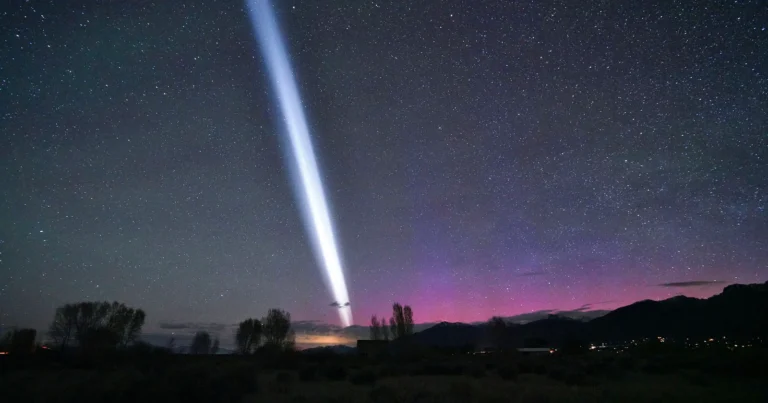

Are UFOs real? Discover what scientists say about UFO sightings, unexplained phenomena, and extraterrestrial theories.
The question “Are UFOs real?” has fascinated humanity for decades. From mysterious lights in the sky to reports from trained pilots, sightings of unidentified flying objects continue to spark curiosity and debate.
But what does science actually say about UFOs?
What Does “Real” Mean in This Context?
To answer whether UFOs are real, we first need to define what “real” means.
Scientists agree that UFOs are real in the sense that people do observe objects or phenomena in the sky that they cannot immediately identify. These sightings are documented worldwide and often reported by credible witnesses.
However, this does not mean that UFOs are alien spacecraft.
The term simply refers to something that has not yet been explained.
Common Explanations for UFO Sightings
The majority of UFO sightings eventually receive logical explanations. Some of the most common include:
- Commercial or military aircraft
- Satellites reflecting sunlight
- Drones
- Weather balloons
- Planets like Venus appearing unusually bright
- Atmospheric phenomena such as ball lightning
Human perception also plays a role. Distance, lighting conditions, and movement can make ordinary objects appear unusual.
The Role of Technology in Modern Sightings
With the rise of smartphones, cameras, and tracking systems, more UFO sightings are being recorded than ever before.
This has both advantages and disadvantages.
On one hand, we now have more visual evidence to analyze. On the other hand, digital artifacts, lens flares, and camera distortions can create misleading images.
Advanced radar systems and infrared sensors used by the military have also detected objects that do not behave like conventional aircraft. These cases are often classified as UAP.
What Scientists and Agencies Say
Organizations like NASA have studied UFOs, or UAP, to better understand these phenomena.
Their findings suggest that most sightings can be explained with current knowledge. However, a small percentage remains unidentified due to lack of data.
Scientists emphasize that there is no confirmed evidence linking UFOs to extraterrestrial life.
The focus remains on observation, data collection, and analysis—not speculation.
Why People Believe UFOs Are Alien Spaceships
Despite the lack of scientific proof, many people believe UFOs are evidence of alien visitation.
This belief is influenced by several factors:
- Popular science fiction movies
- Media coverage of mysterious sightings
- Government secrecy around certain cases
- Human curiosity about life beyond Earth
The idea of extraterrestrial visitors is compelling and captures the imagination, even without solid evidence.
Could UFOs Be Something We Don’t Yet Understand?
While most UFO sightings have explanations, there is always the possibility that some phenomena represent something not yet fully understood.
Science evolves over time, and new discoveries often challenge existing knowledge.
However, scientists approach this possibility with caution. Extraordinary claims require extraordinary evidence, and so far, such evidence has not been found.
Conclusion
So, are UFOs real?
Yes—in the sense that unexplained aerial sightings do occur. But there is no scientific evidence that these objects are alien spacecraft.
Most UFO sightings can be explained through known natural or human-made causes. The remaining unexplained cases are simply a reminder that there is still much to learn about our world and the skies above us.


0 Comments